How Does Qlution Injection Mold Deliver Accurate and Durable Results?
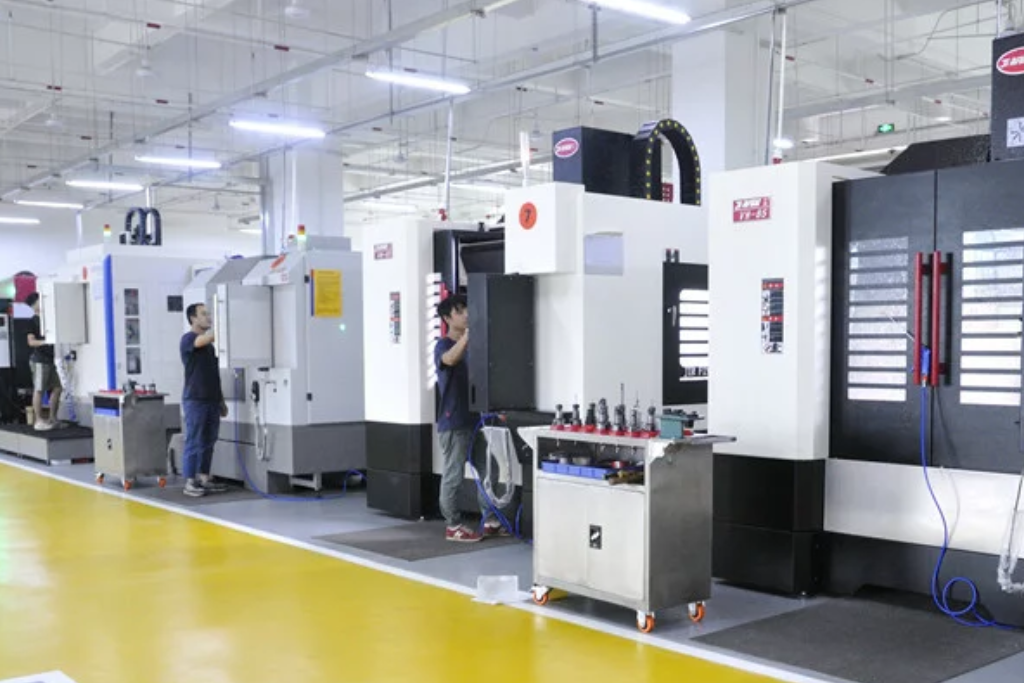
Qlution Mold Making Company delivers accurate and durable injection molds by combining precision design, advanced machining, quality materials, and strict inspection processes. With modern CNC equipment, mold flow analysis, and optimized cooling structures, the company helps manufacturers achieve tight tolerances often within ±0.01–0.05 mm. Proper material selection and manufacturing control allow molds to support hundreds of thousands of production cycles while maintaining stable part quality.
Injection mold performance depends on how well design, manufacturing, and testing processes work together. A mold used for automotive, medical, electronics, or consumer products must produce identical parts repeatedly while handling high pressure, heat changes, and mechanical movement.
A typical injection mold can operate from 100,000 to more than 1,000,000 cycles depending on steel type, maintenance conditions, and product requirements. Manufacturers usually focus on dimensional accuracy, surface finish, cycle time, and mold lifespan when selecting a supplier.
A well-designed mold reduces production adjustments, improves part consistency, and helps manufacturers maintain stable output during long-term production.
The first stage of achieving accuracy starts with digital mold design. Engineers use 3D CAD software and simulation tools to study filling patterns, cooling behavior, shrinkage, and possible deformation before machining begins.
Mold flow analysis has become common in professional mold manufacturing since the 2000s. By analyzing plastic movement inside the cavity, engineers can adjust gate positions, runner systems, and cooling layouts before producing the physical mold.
| Design factor | Influence on injection molding |
|---|---|
| Cavity structure | Controls part dimensions and shape accuracy |
| Gate location | Affects filling balance and surface quality |
| Cooling channel layout | Influences cycle time and deformation |
| Mold tolerance | Determines final assembly precision |
For precision components, mold tolerances are often controlled within several hundredths of a millimeter. A difference of only 0.02 mm in a cavity area may affect the final fit of electronic housings, connectors, or mechanical parts.
After the design stage, manufacturing accuracy determines whether the mold can meet production requirements. Modern mold makers use CNC machining, EDM, wire cutting, and precision grinding to produce complex mold components.
CNC machining technology has continued improving since the 1990s, allowing manufacturers to achieve micron-level processing accuracy in many applications. EDM machining is especially useful for producing detailed cavity structures that are difficult to create through traditional cutting methods.
Qlution Mold Making Company applies precision manufacturing methods to create injection molds for different industrial applications. The manufacturing process includes component machining, surface treatment, assembly inspection, and trial molding.
The production process usually includes:
-
Raw steel inspection before machining
-
CNC processing for major mold components
-
EDM processing for complex details
-
Surface polishing for appearance requirements
-
Final measurement with coordinate measuring machines
A coordinate measuring machine can check mold dimensions with high accuracy and compare actual measurements against the original CAD model. This inspection process helps identify machining differences before the mold enters production.
Material selection has a direct relationship with mold durability. Injection molds experience repeated heating and cooling cycles, sometimes several hundred times per day in high-volume manufacturing environments.
Common mold materials include P20 steel, H13 steel, and S136 stainless steel. Different materials provide different levels of hardness, corrosion resistance, polishing ability, and wear resistance.
| Mold material | Common application |
|---|---|
| P20 steel | General plastic parts and medium-volume production |
| H13 steel | High-temperature applications |
| S136 steel | Medical, optical, and high-polish components |
For example, stainless mold steel is often selected for applications requiring corrosion resistance and excellent surface appearance. Automotive interior parts and medical components may require different steel grades because their production conditions are not the same.
Cooling system design also affects mold accuracy and production efficiency. During injection molding, molten plastic enters the cavity at temperatures that can exceed 200°C depending on the polymer type.
Uneven cooling can create shrinkage differences, warping, and longer cycle times. Engineers improve cooling performance by placing channels closer to high-temperature areas and adjusting water flow paths.
A well-designed cooling system can reduce cycle time by 10–30% in some applications. In mass production, even a few seconds saved per cycle can significantly increase annual output.
Cooling performance affects both the appearance of molded parts and the stability of production speed.
Mold durability is also influenced by surface treatment and maintenance quality. Components that move repeatedly, such as ejector pins and sliders, require proper finishing and lubrication to reduce wear.
In many industrial applications, a high-quality injection mold can maintain stable production for 500,000 cycles or more. Some specialized molds designed for high-volume automotive production can exceed 1 million cycles with regular maintenance.
Manufacturers also evaluate mold performance through trial production. During mold testing, engineers check sample parts for dimensions, appearance, filling quality, and assembly performance.
A trial process may include multiple adjustments before final approval. Parameters such as injection pressure, holding time, cooling time, and material temperature are adjusted to achieve consistent results.
| Inspection item | Purpose |
|---|---|
| Dimensional measurement | Confirms product accuracy |
| Surface inspection | Checks appearance quality |
| Mold movement test | Verifies mechanical operation |
| Cycle test | Evaluates long-term stability |
Quality management throughout manufacturing helps prevent problems after mass production begins. Professional suppliers usually combine incoming material inspection, machining checks, assembly testing, and final product evaluation.
Injection molding industries continue increasing their requirements for precision. In 2024, the global injection molding machine market remained widely used in automotive, healthcare, packaging, and electronics manufacturing, where manufacturers require faster production and tighter quality control.
Different industries require different mold solutions. Automotive manufacturers often need large molds with high durability, while medical manufacturers focus on cleanliness, precision, and repeatability. Electronics companies usually require detailed structures and excellent surface finishes.
A supplier with experience across multiple industries can adjust mold design according to product material, production volume, and expected service life.
Accurate injection molding comes from controlled processes, suitable materials, and careful manufacturing at every production stage.
By combining engineering design, precision machining, durable steel selection, cooling optimization, and inspection procedures, modern injection molds can provide stable performance over long production periods. A reliable mold helps manufacturers reduce production interruptions, maintain consistent part dimensions, and achieve better manufacturing efficiency.